[Yukon, Canada]
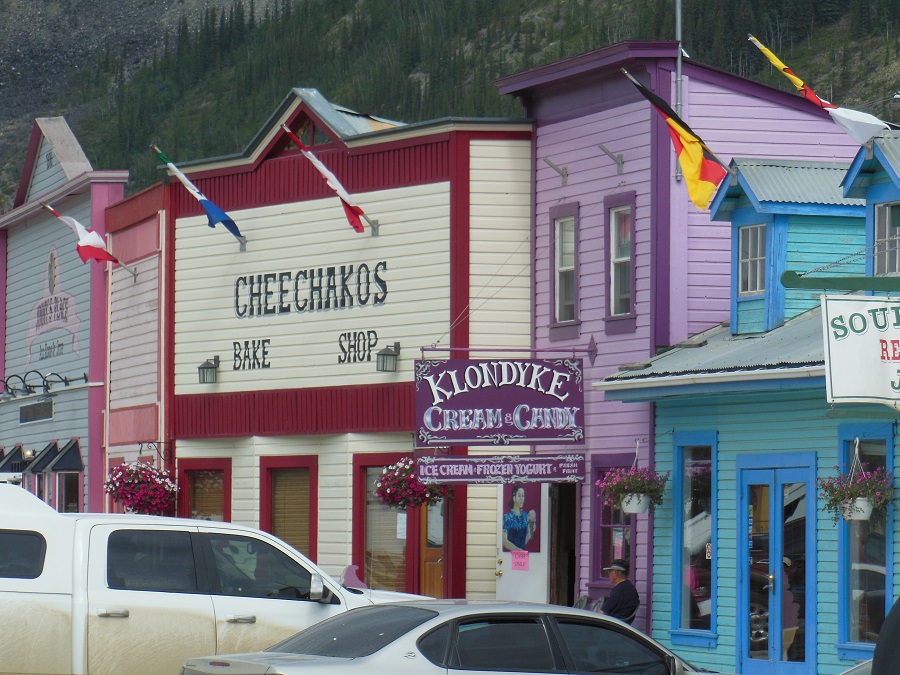
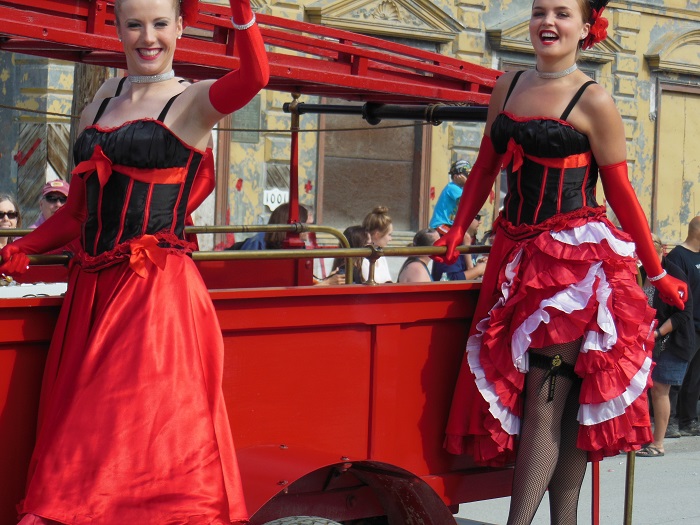
I didn’t know what to make of Dawson City when I first drove into town. It felt like I was entering a Hollywood set, all old buildings with larger-than-life façades. Dirt roads with wooden sidewalks. People walking around in gold-rush-period costumes. Felt a bit kitschy at first. Very touristy.
But when I began to delve deeper, I developed a healthy respect for this town and all that the residents have done to restore these old buildings and celebrate its history. In fact, Dawson City was the highlight of my Yukon trip, an oasis at the end of a long drive from Whitehorse. I enjoyed the place so much that I hung around for the Canada Day celebrations.
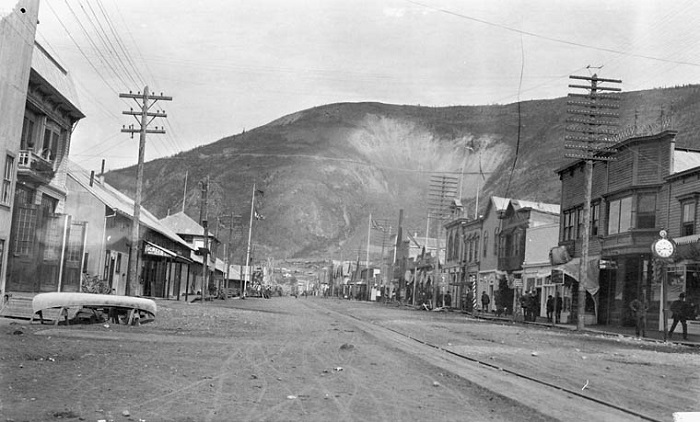
Dawson City (named after Canadian geologist George M. Dawson) is a small town now with fewer than 2,000 permanent residents. But at the height of the Klondike Gold Rush in 1898, more than 40,000 people occupied this small area of the Yukon.
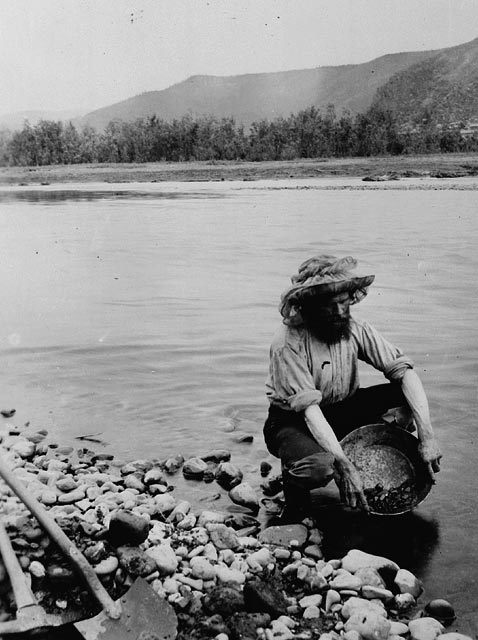
The numbers dwindled over time, of course, once most of the gold was gone. 8,000 residents by 1899; 5,000 when the town was incorporated in 1902; and then fewer than a thousand during the 1960s. Dawson City was the capital of the Yukon up until 1952. The economic damage suffered by the townsfolk as a result of the Alaska Highway bypassing them forced a relocation of the territorial seat to Whitehorse.
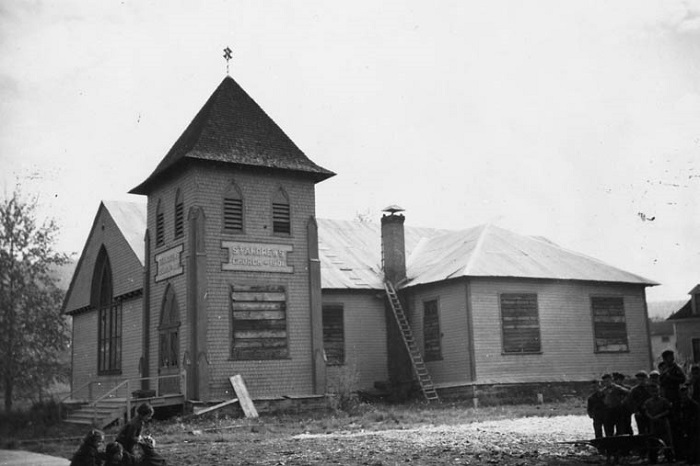
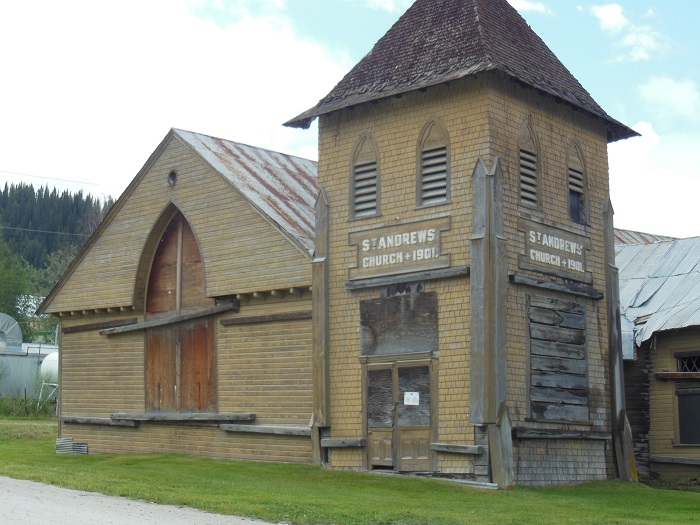
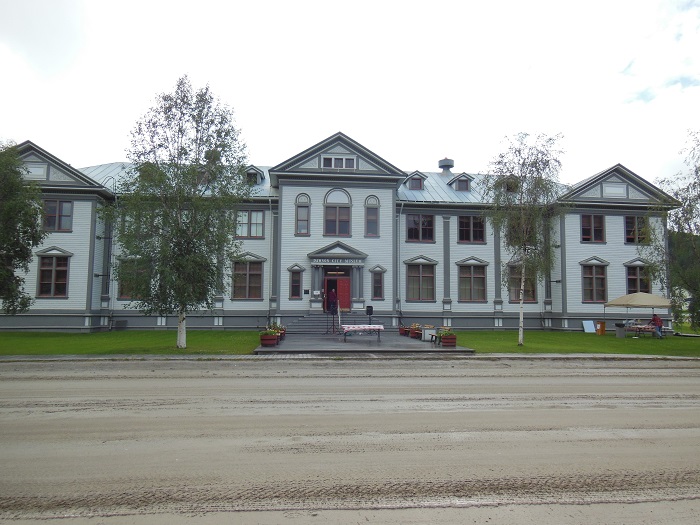
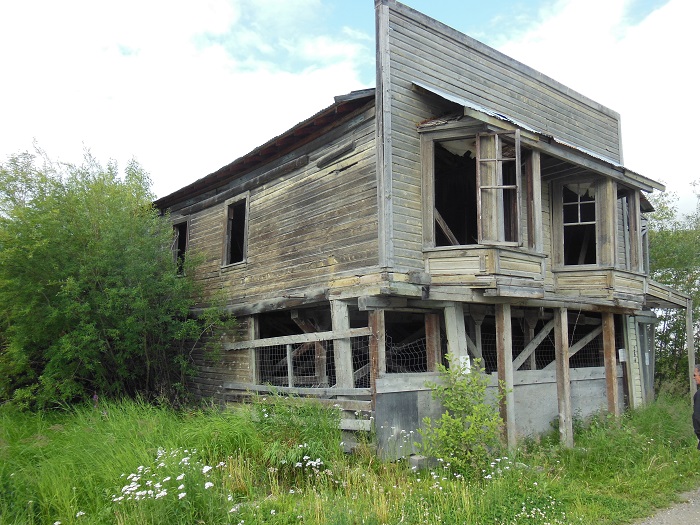
All along, most of the old buildings from the gold rush sat vacant. They had simply been abandoned over 100 years ago when most of the gold was gone. But once the tourism industry started to improve in the Yukon, the town leaders made a concerted effort to attract investors that would restore some of these buildings.
They have done a fabulous job so far; they are a credit to their community, to the tourism of the Yukon, and to the historical record of Canada. I am grateful for their efforts.
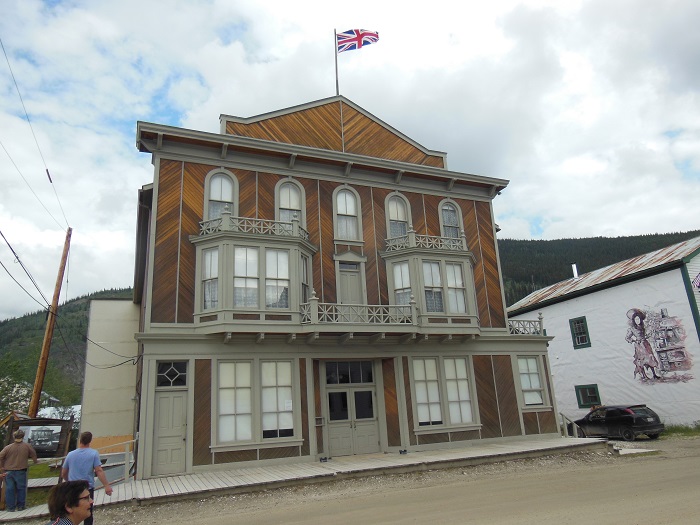
This beautiful structure was built in 1899 by ‘Arizona’ Charlie Meadows, a showman and ‘self-made heroic figure’. It was a very successful business while the gold was abundant, offering vaudeville acts, melodrama, music, and comedy for a single price. One could also gamble until dawn and pay a dollar-a-dance for the dance hall girls after midnight.
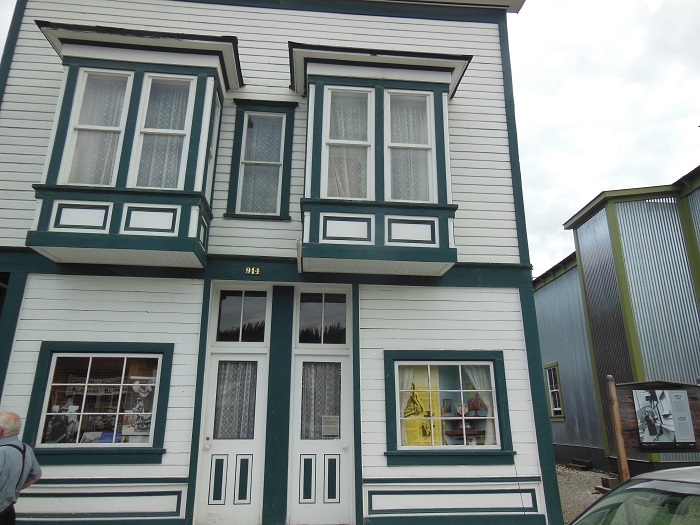
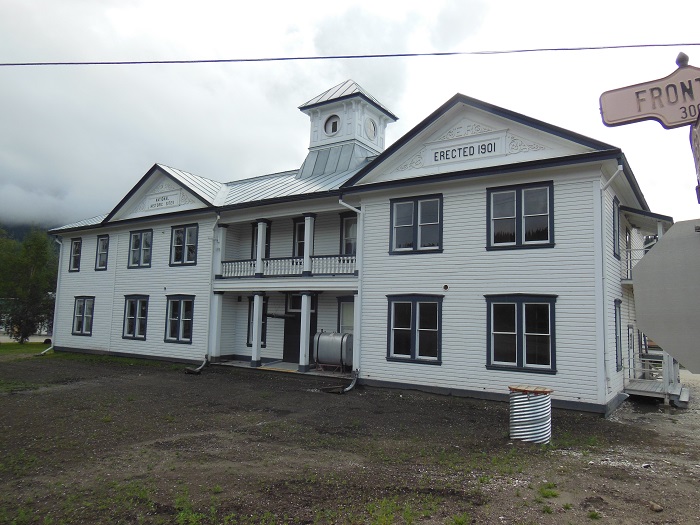
This was originally a boarding house and laundry when it was built in 1903. But when Mathilde ‘Ruby’ Scott bought it in 1935, she operated a brothel out of here. It was illegal, of course, but she had tacit approval from local officials until 1961, when she was finally charged with keeping a bawdy house. She was tenacious, though, maintaining the building as a boarding house once again until her retirement eight years later at the age of 84. During the day, the prices for favourites, such as Liberty or Cecile, were “five dollars a time or twenty dollars a night”.