Destination Monaco, home of our financially wealthiest, the world’s highest life expectancy, a tax haven for high-income earners in other countries, and a money-laundering microstate, where I find the cheapest condo selling for over 20 million euros. It’s headed by Albert II, Prince of Monaco, former bobsleigh competitor in five Olympics, automobile enthusiast, advocate for environmentalism and ocean conservation, and a man who seems to struggle to keep his zipper up outside his own bedroom. Monaco is also home to the Monaco Grand Prix and the Monte-Carlo Casino, made famous, at least to me, from the James Bond movies. I think to possibly go into the casino just to look around, but I see that the people entering and exiting are dressed more appropriately than the hiking pants and shirt I am wearing. When I see the professionally dressed host and hostess eyeing me curiously, I decide to pass.
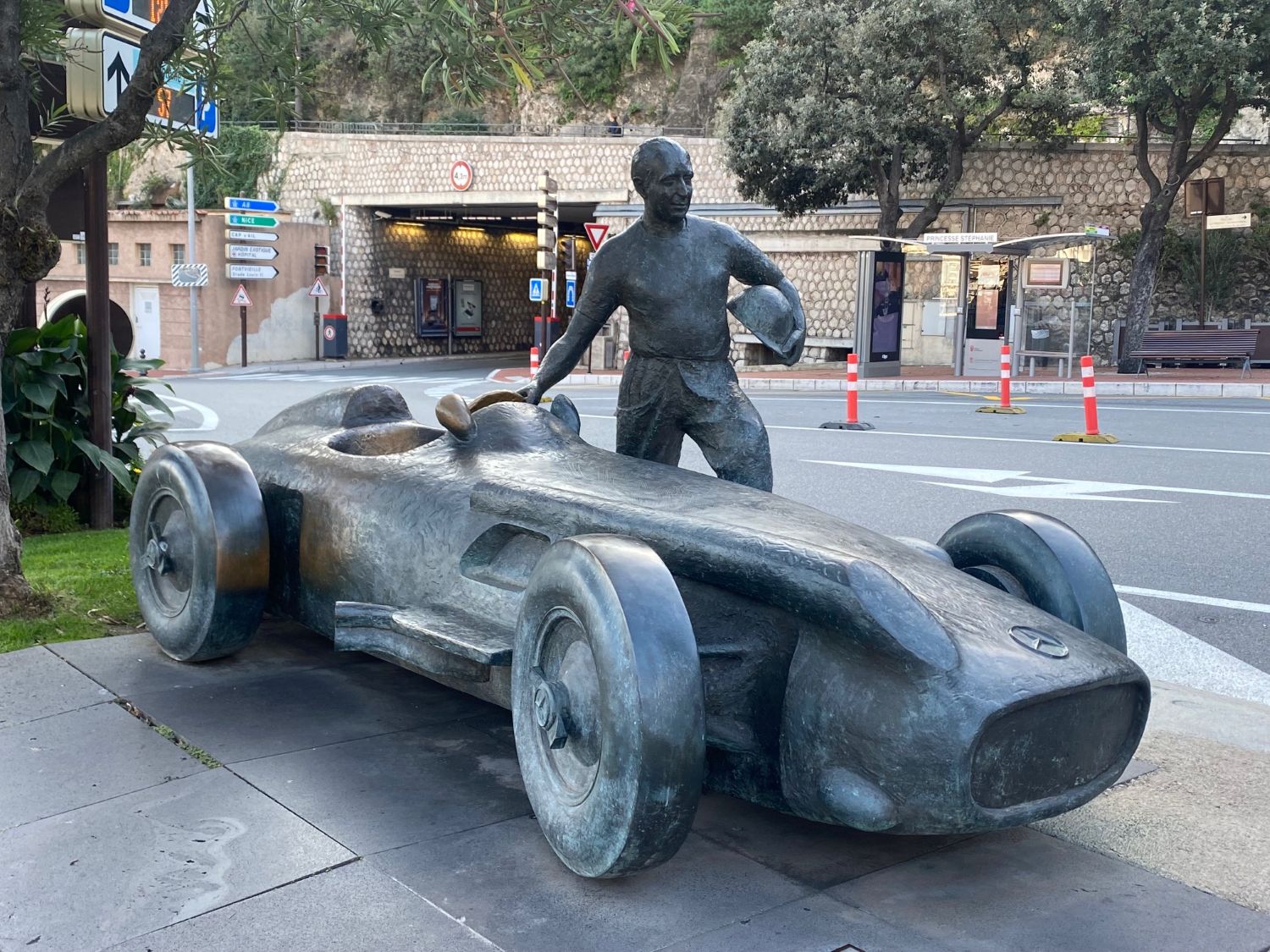
It was standing room only on the train from Nice to Monaco this morning, the same for trains coming from Italy. These are the workers coming to support the Monégasque economy. There are police in numbers, in pairs every few street corners, but they also do not live in Monaco. They are commanded by a French officer, I am told. I am surprised to find that the restaurant meals are priced reasonably, only about ten percent more than in neighbouring Nice. And the gelato is also reasonably priced, thank goodness, since it seems to be my staple along the Italian and French Rivieras. I walk back and forth across the country, taking in views, wondering at the architecture and statues, and within a couple of hours, I’ve seen everything I want to see. I wander down from the Prince’s Palace, through Monaco’s first garden, the Jardins Saint-Martin & Sainte-Barbe, and sit on a bench looking out over the Mediterranean. I reflect that this is not a place I could live, at any price. Its most redeeming quality for a frugal traveler like myself is simply that Monaco does not experience rush-hour traffic.


