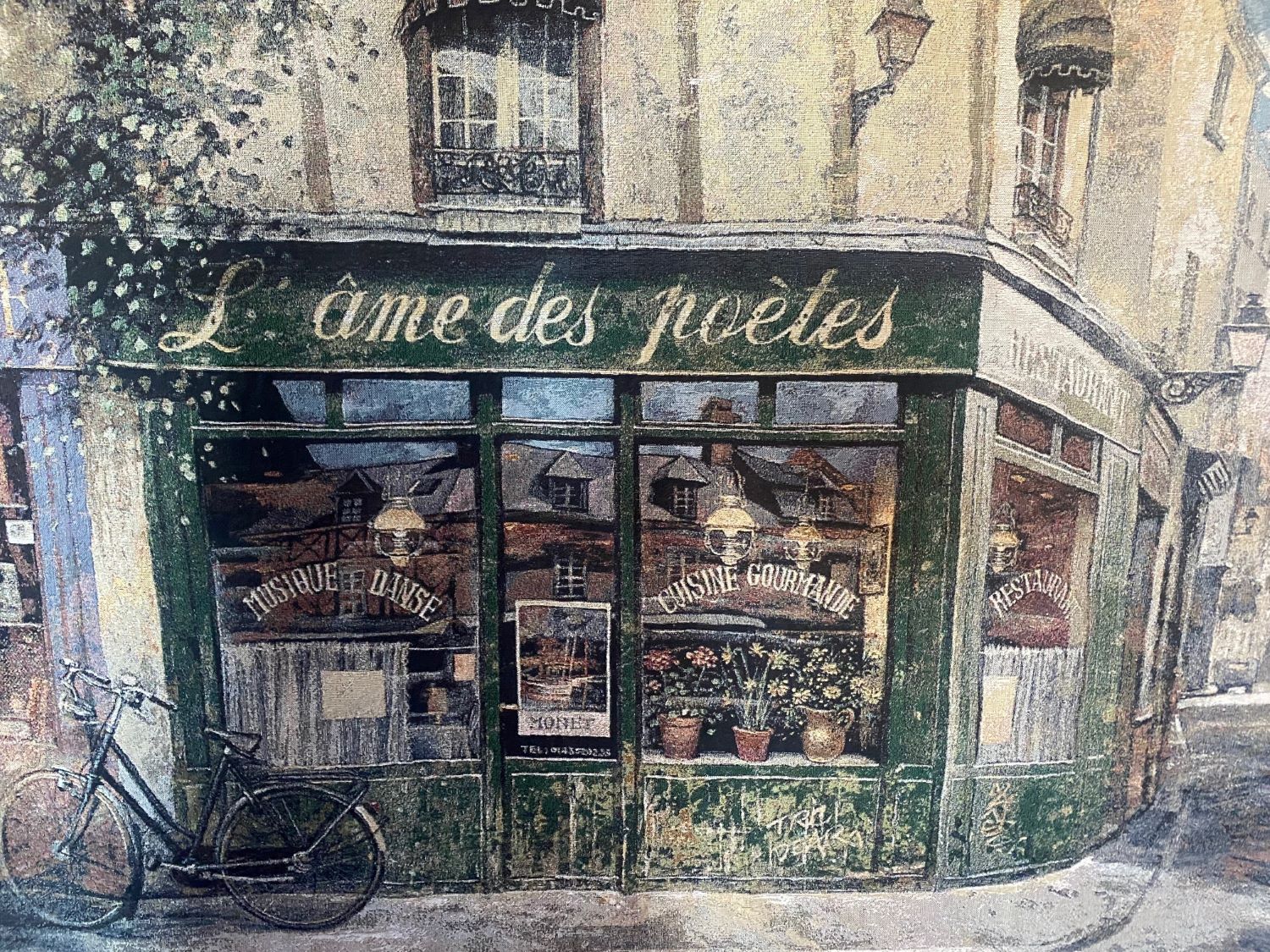
Her mother says ‘no’,
but with her ear to the vent,
the voice of her visiting aunt
from Montreal whispers promise.
You must let her go to the city, dear sister.
She’s different, you know, not like any of us,
she doesn’t belong in this village. She’s dreamy,
her head in the clouds. Remember when she
accidentally got locked in the library overnight?
And when she talks, it’s like…
well, it’s like someone else’s voice coming through her.
Elle a l’âme d’une poète, dear sister.
She has the soul of a poet!
In Toronto, she is often broke.
She takes almost any kind of work,
saves her money, quits her job to write,
when the money runs out, she takes another job,
never the same type of job,
she wants a variety of experiences for her writing.
She lives with other struggling artists,
sleeps on a mattress on a warehouse floor,
where privacy is at a premium and where
cockroaches build nests under cupboards,
she stuffs toilet paper from public washrooms
into her pocket to save money,
does her laundry in the bathroom sink.
When she takes a job, she works hard;
her managers never want her to leave.
But she must.
It’s her destiny to play with words.
She quits a job at a supermarket
after her boss crosses his professional boundary,
but he follows her one night to a poetry slam,
watches her perform, realizes he doesn’t understand
her at all, her words, her emotion.
He leaves, and never bothers her again.
By her mid-twenties, she has worked
as an office clerk, a used-book seller,
an assistant to the assistant of an executive,
a barista, a flagger at a construction site,
a labourer at an auction house, a maid,
a dishwasher, a restaurant hostess,
and has even spent six months working
as an exotic dancer, by itself providing
enough money to buy her
an entire year of freedom to write,
and experiences enough to fill a memoir.
And by her mid twenties,
she has written poems and essays
to fill volumes, has started to make a name
for herself among other emerging writers,
has invested her bits of
writing income for her future.
She is making progress.
And now she is a writer in residence,
still struggles financially,
but at least her meals are free.
And here, in her safe space,
among others of her kind,
she cannot escape her muse,
cannot put words to paper,
cannot move her fingers across her keyboard,
quickly enough to capture the ideas,
the words, the experiences
of her real and imaginary lives.
At a university gala in which she will speak,
wearing an elegant gown
borrowed from a university dean,
she is stopped by the hostess who is
holding the guest list in her hand.
And who are you, ma’am?
Je suis l’âme d’une poète.
She points at her name on the list.
I am the soul of a poet!