[Spain]
Dates: June 1-4, 2018
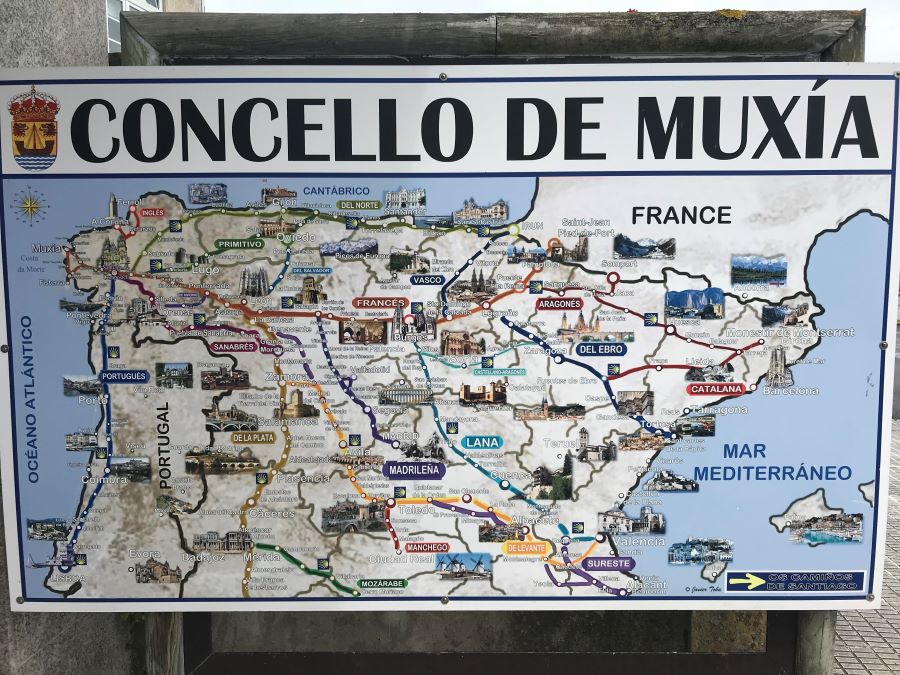
Route: Santiago de Compostela to Muxia, Spain (via Finisterre)
Distance: 119.4 kms
Walking Days: 4
Average Distance/Day: 29.9 kms
Longest Day: 33 kms
Shortest Day: 27 kms
Santiago de Compostela to A Pena – 28.4 km
It was the cry of Ultreia! (still further) by medieval pilgrims that led to the development of the Camino Finisterre. After visiting the remains of Saint James at the Cathedral of Santiago de Compostela, many pilgrims decided to continue to the end of the world at Finisterre.
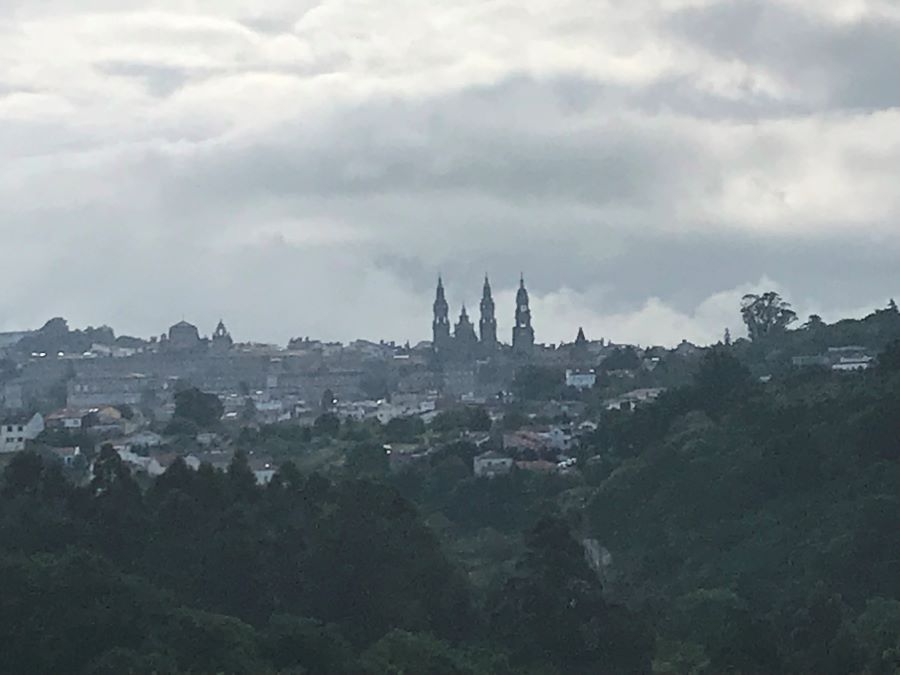
The Costa da Morte (Death Coast) was the furthest Roman stronghold, where people believed souls ascended to heaven. Cape Fisterra is a symbolic and mythical place where the conquering Romans sat agog watching the sun disappear over the edge of the ocean. Cape Fisterra still has that effect on people today.
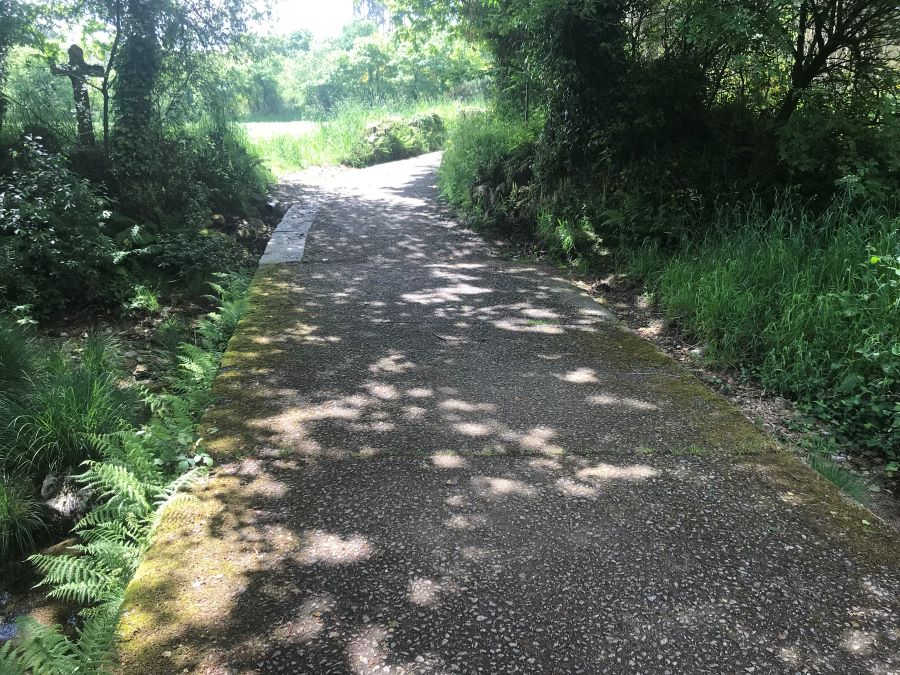
The trail heading out of Santiago to Finisterre wasn’t nearly as busy with pilgrims as the trails leading into Santiago. Most people will end their pilgrimage in Santiago after visiting the remains of Saint James at the cathedral.
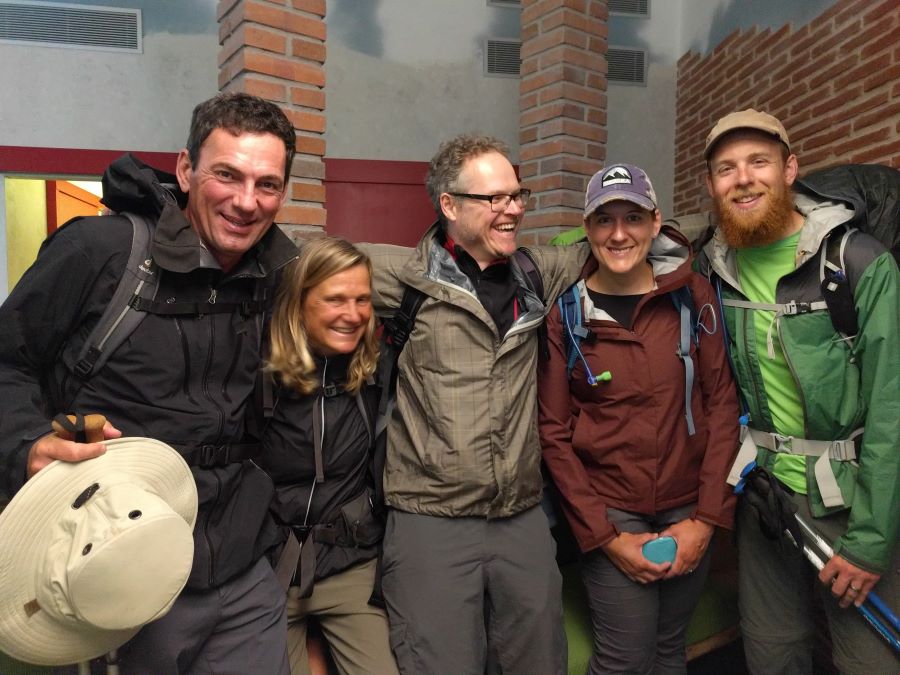
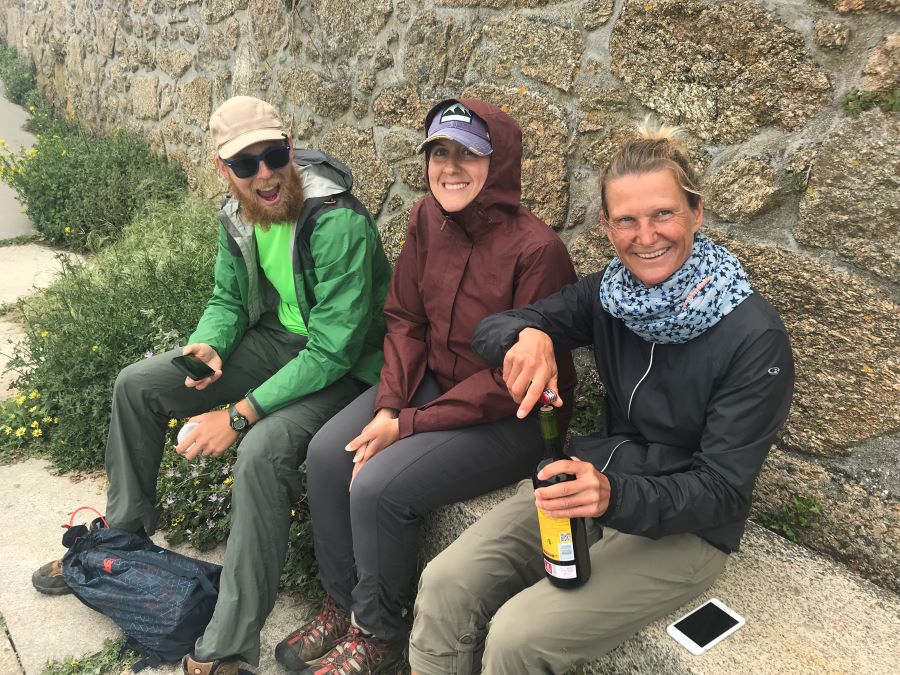
I’ve begun this journey to Finisterre with my dear friends, Birte, Kaitlin, and Greg, with whom I ended up walking the 837-kilometer Camino Del Norte from Irun to Santiago in Spain. Like some of those medieval pilgrims, we weren’t ready to stop walking, and I’m so glad that all of our schedules make it possible to walk all the way across Spain together.
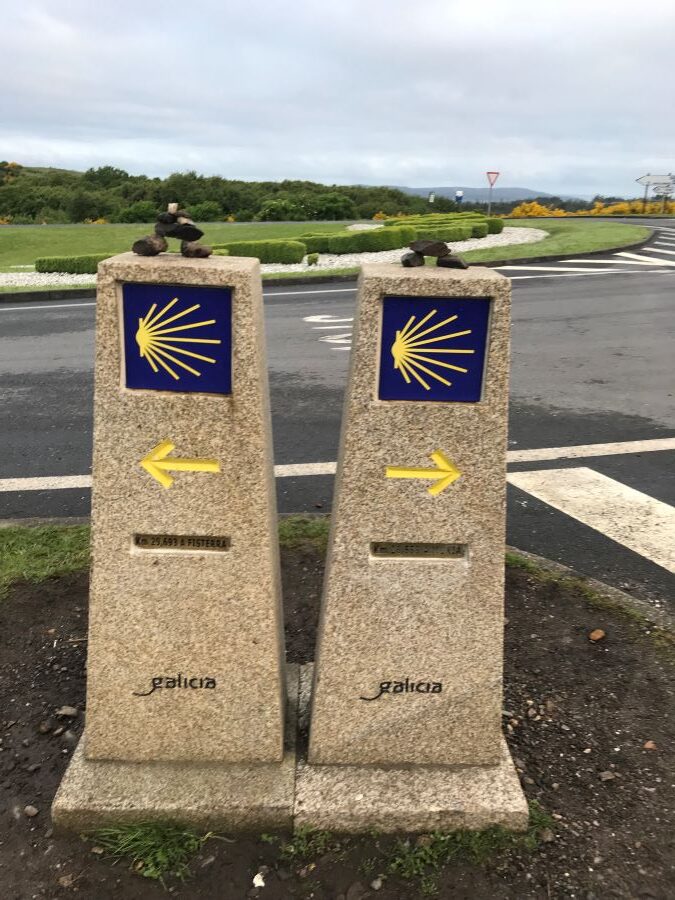
We got off to quite a late start this morning, more than two hours later than usual. It was 9:00 am before we put the pack covers over our packs in anticipation of rain and headed west out of the city, after having eaten a hearty breakfast with our Lithuanian friend, Vytas. I’ve said goodbye three times to him now, thinking I might never see him again. But we continue to bump into each other, so I expect I’ll see him again one day.
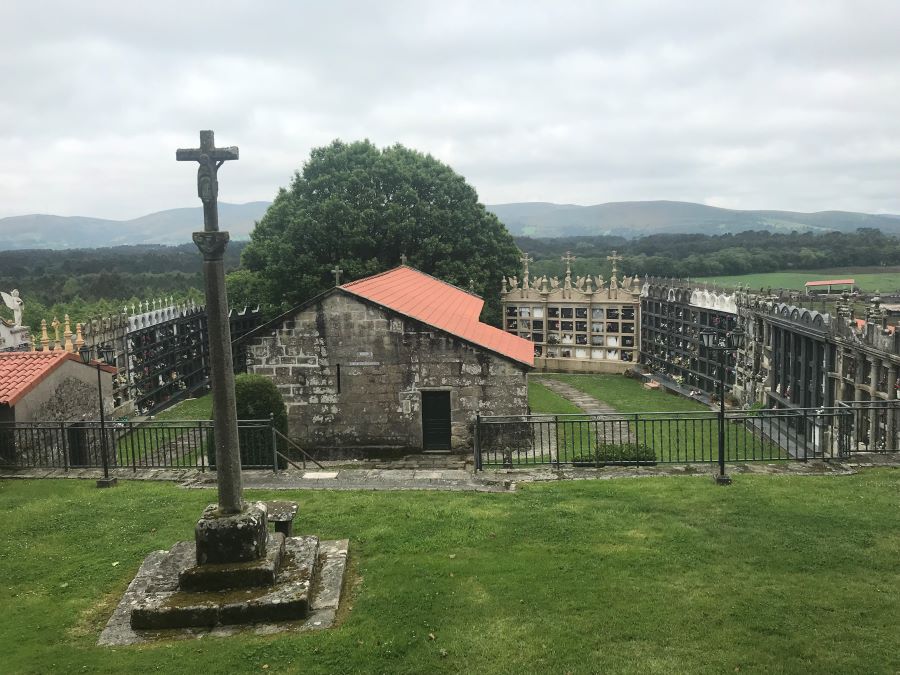
The walking felt different today. After completing the Camino del Norte, it felt like we were on a bit of a victory lap. It’s less than 90 kilometers to Finisterre and we’ve got three days to get there, so I found myself wanting to stop at every open cafe for a coffee and pastry, to lallygag in villages to take pictures, and to commune with nature. It didn’t quite work out that way, but the lazy feeling was pleasant.
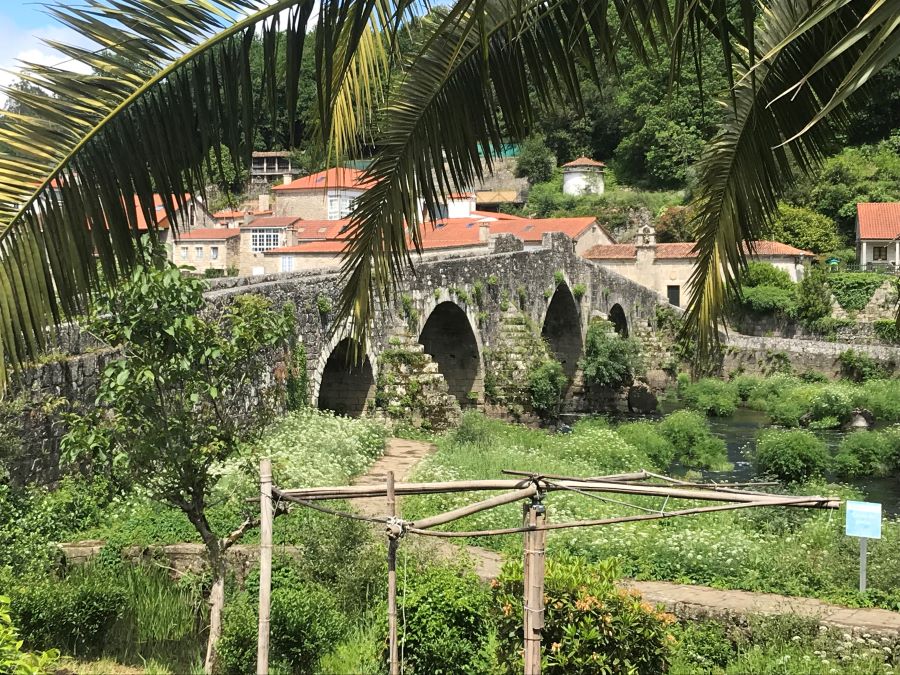
A Pena to Logoso – 31.0 km
It was a good day of hiking, with us managing to miss the threatening rain again before arriving at our albergue in A Pena. I was happy Greg had reserved some beds here because the albergue was full, and although the proprietor did his best to accommodate tired pilgrims by adding extra mattresses to the floor, he eventually had to turn people away.
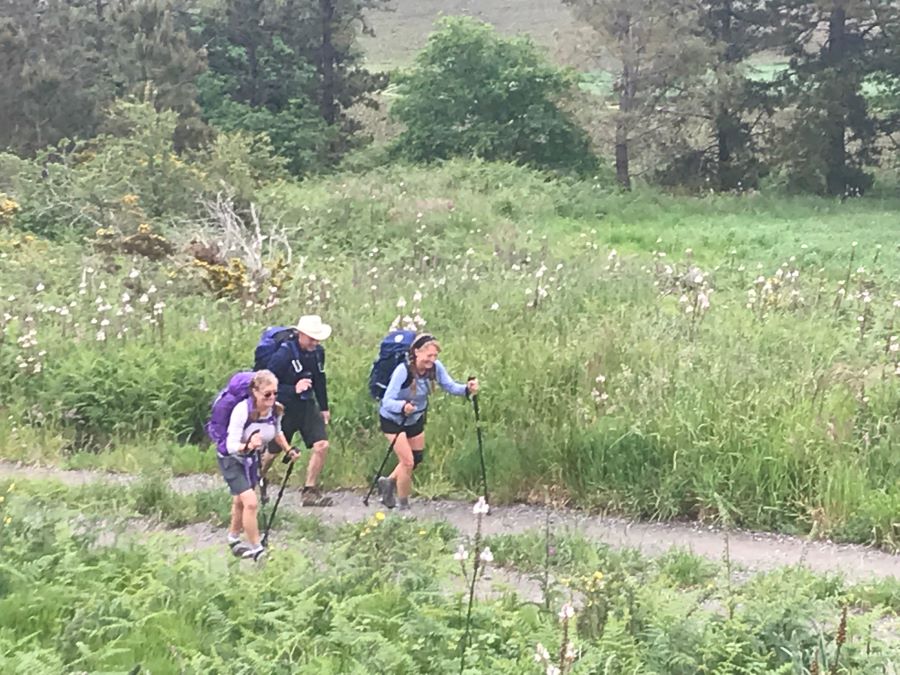
I met quite a few new pilgrims today, sharing wine, beer, pizza, stories, and laughter with them. It’s a different cohort than what we saw on the Camino del Norte. Everyone here has already completed a longer Camino to get to Santiago de Compostela, mostly from the Caminos del Norte, Frances, and Portuguese, and are tagging on the Camino de Finisterre for the sheer joy of walking.
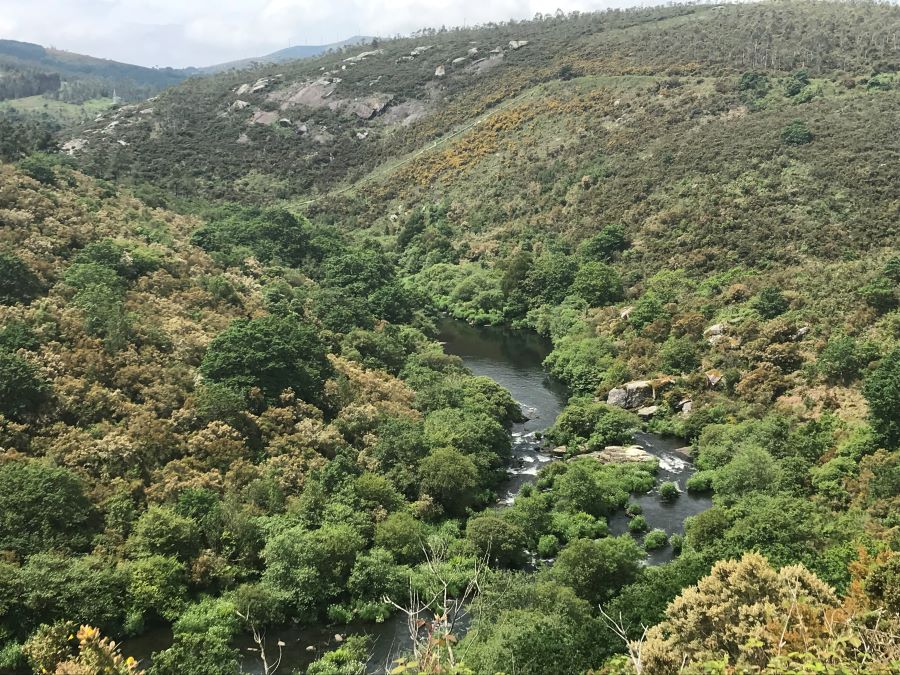
I did see, however, a couple of pilgrims limping in pain. I admire their tenacity in pushing to Finisterre despite already having completed a major Camino.
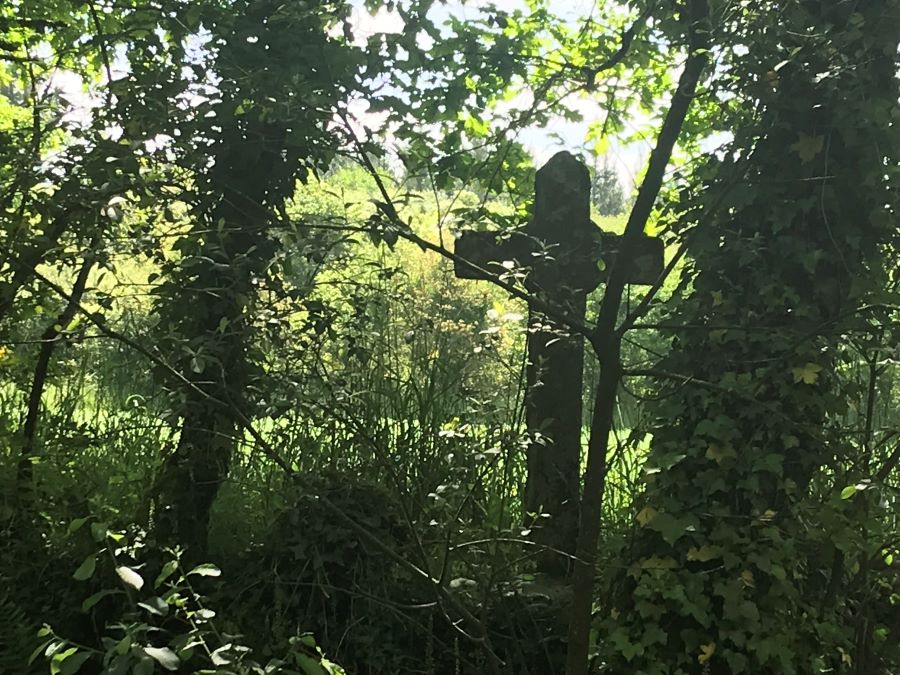
Logoso to Finisterre – 33.0 km
Our band of four – Birte, Kaitlin, Greg, and I – packed and ate breakfast quietly before starting our day of walking on the Camino for what is to be our final day walking together. There was anticipation and excitement, but also a looming sadness that it will soon end.
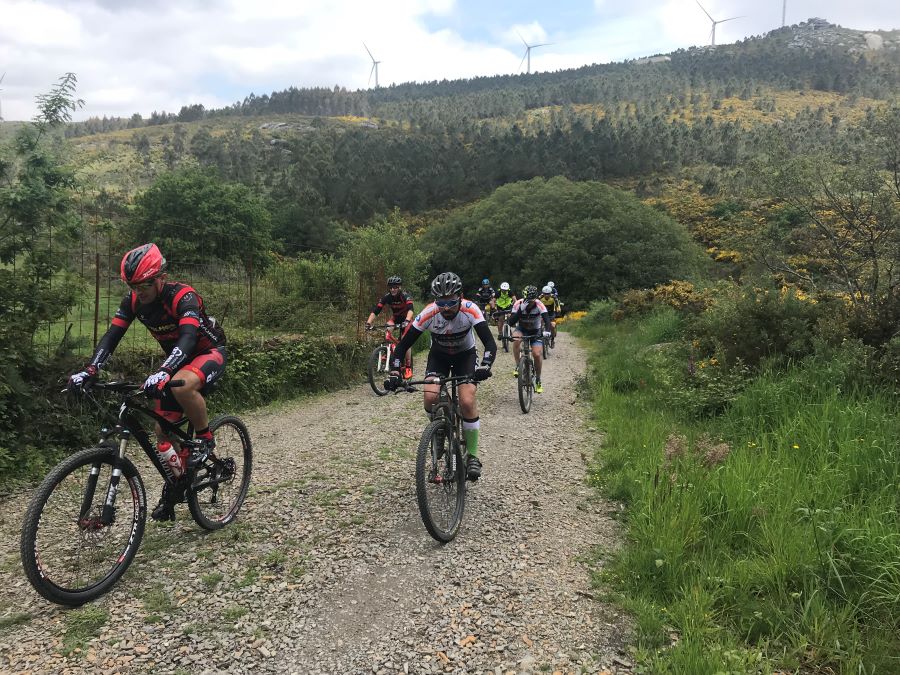
When we finally arrived at the lighthouse at Cape Finisterre, we four had walked all the way across Spain together in 30 days. It’s been a while since I’ve had a blister, but I managed to pick up a couple of new ones today. My feet ache, as does my heart.
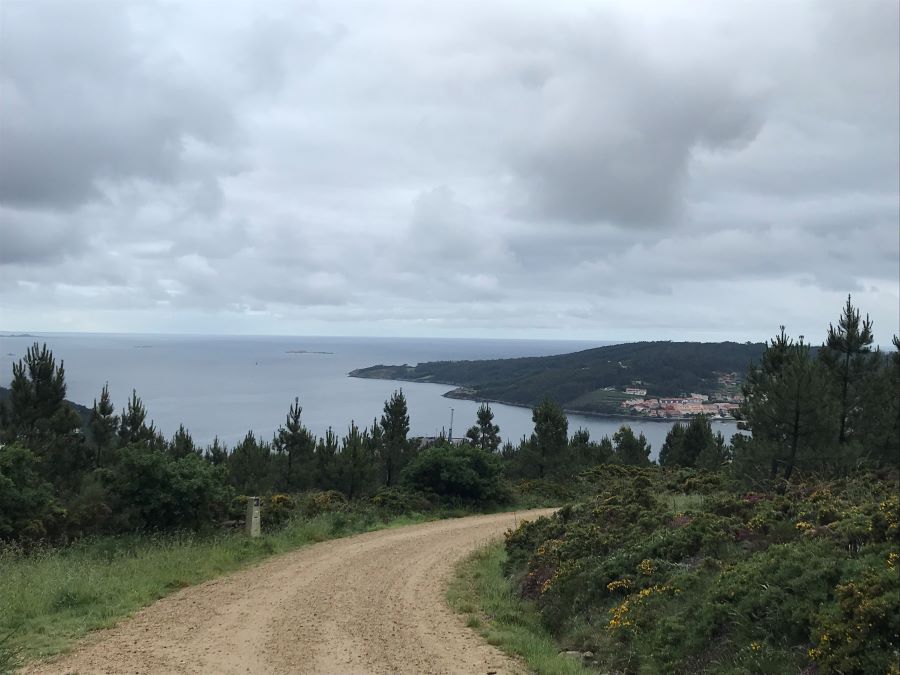
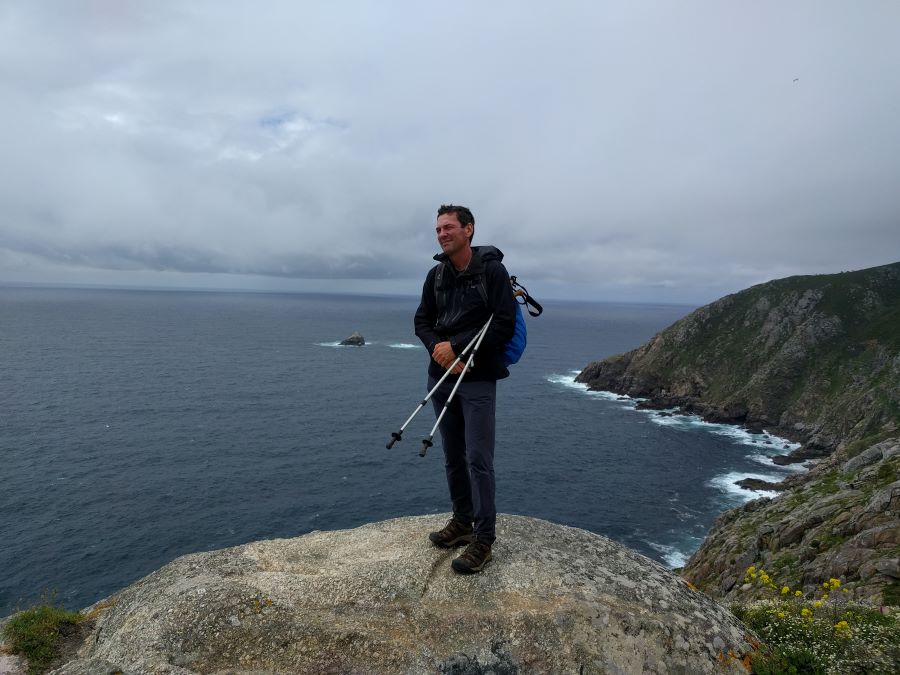
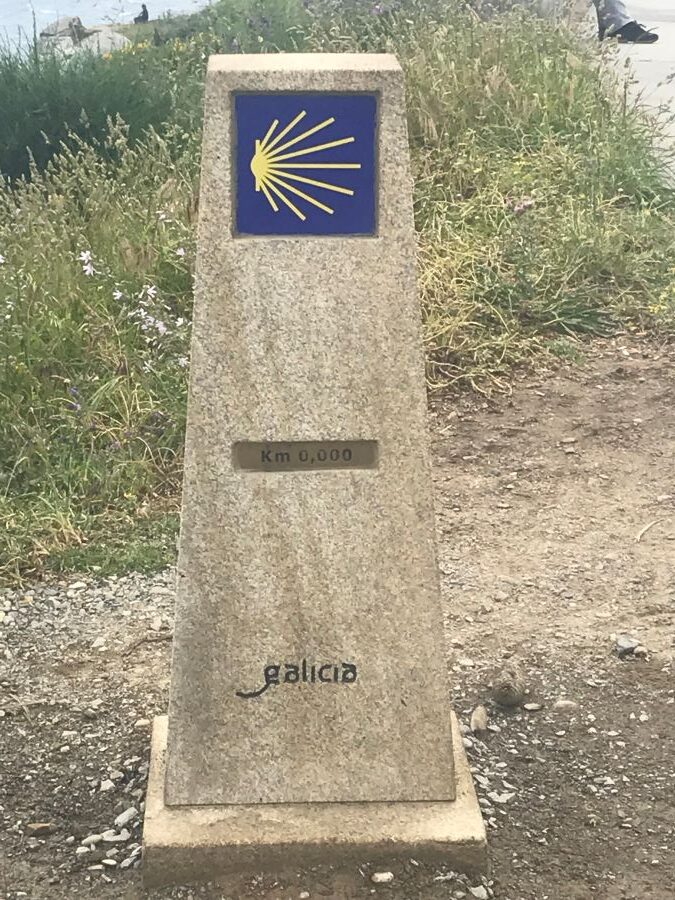
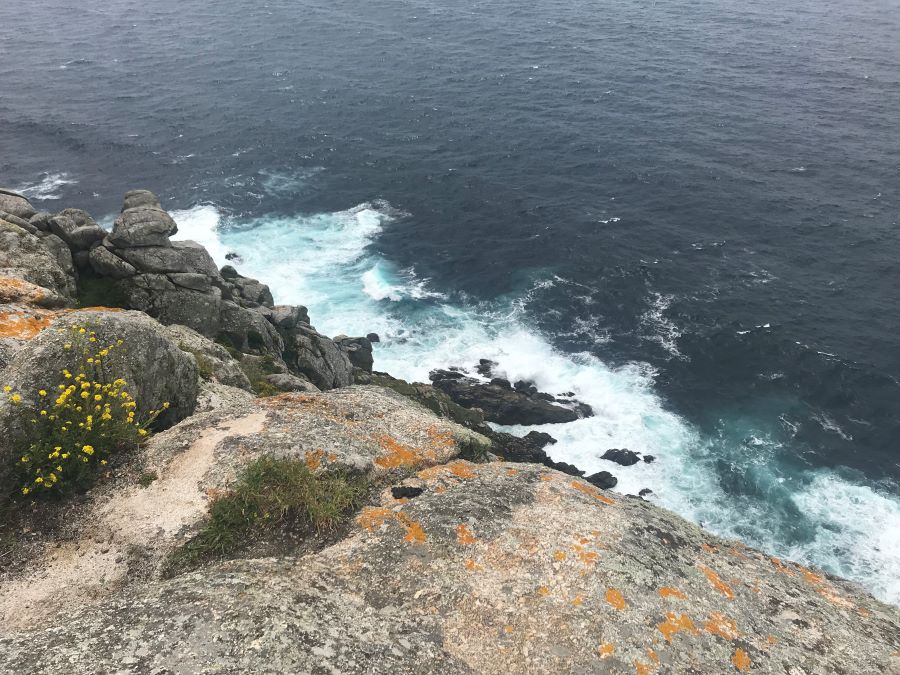
At the Cape, we did the usual pilgrim things, taking photos of the zero-kilometer marker, standing in the cliff overlooking the Atlantic Ocean and snapping pictures, and wandering down the rocky trail to sit quietly and ponder life.
A few fires still smoldered where some pilgrims had burned their guidebooks and bits of clothing. In medieval times, pilgrims burned their lice-infested clothing here, donning fresh clothes for their journey home. Today, although it is illegal to start fires on the Cape, the tradition continues.
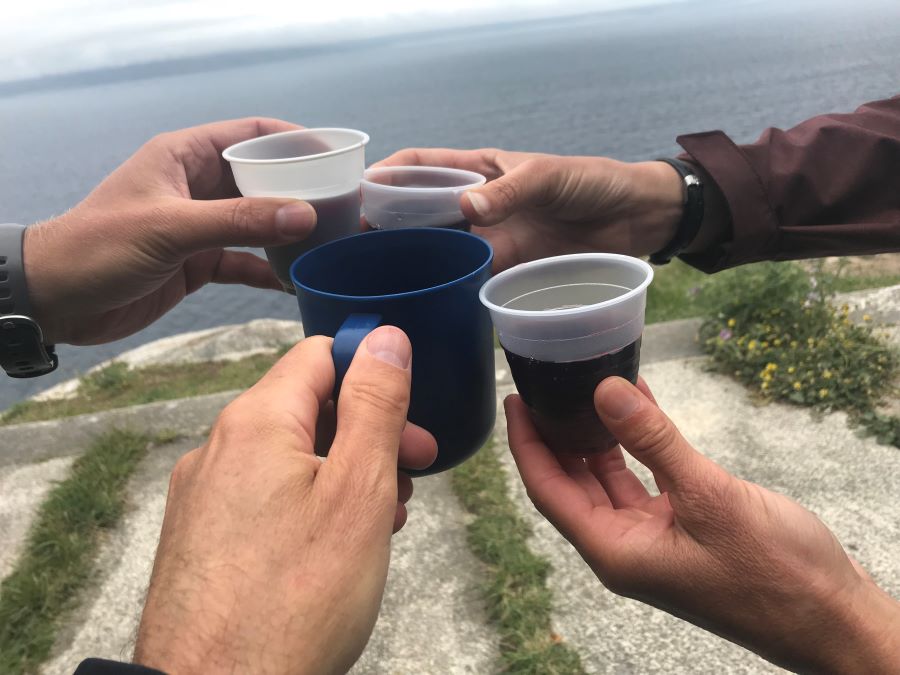
We found a bench on the slope out of the cold wind, happy that the rain had abated for a couple of hours, and popped the cork on a bottle of wine. My friends drank out of plastic cups we borrowed from our albergue, and I used my favourite hiking cup to celebrate our Camino finish as well as our newfound friendships.
At the Cape, we met a fellow pilgrim whose family had flown to Santiago to meet her at the end of her journey. They had rented a car and driven to Cape Finisterre for the day. It was a happy reunion.
After walking the three kilometers back to town, we ran into more of our pilgrim friends we had met along the Way. Everyone was all smiles and happiness.
Tomorrow, although I will continue on the Camino de Finisterre to Muxia, I will be entering a new chapter, hiking without my wonderful friends for the first time in a month. Birte will head off to Portugal to surf with a friend, and Kaitlin and Greg will head off to Seville (Greg says he needs to see a barber – haha) before exploring Porto.
Finisterre to Muxia – 27.0 km
The guidebook says that the 27-kilometer Camino route between Finisterre and Muxia spans rugged Galician countryside, so I expected the walking to be challenging. But it wasn’t. In fact, the route is relatively tame compared to some of the terrain I’ve been walking on in the last month. The trail is pleasant to be sure and I enjoyed it immensely, despite that it’s been raining most of the day and my blisters make walking uncomfortable.
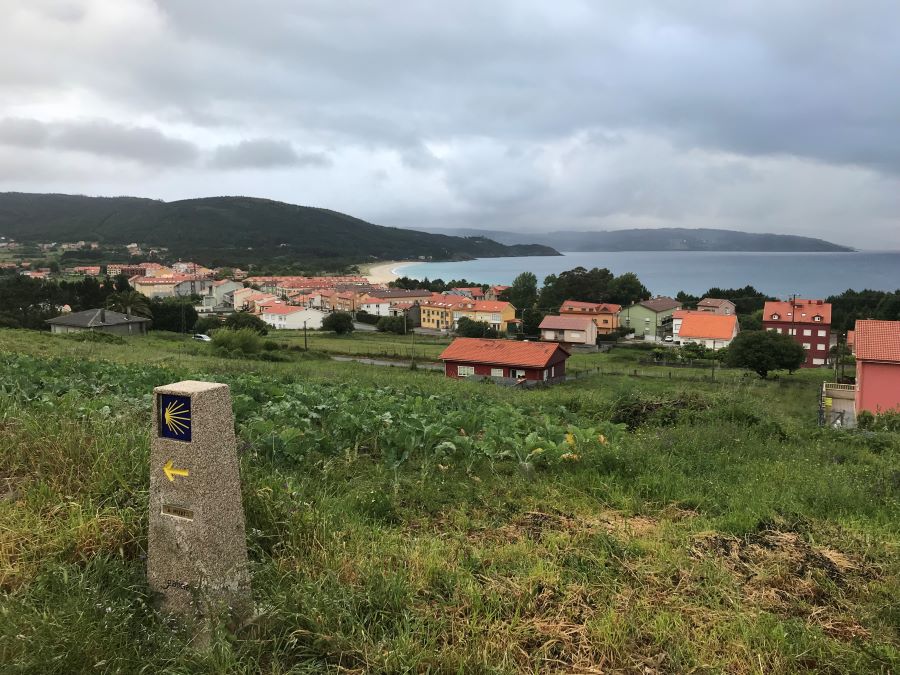
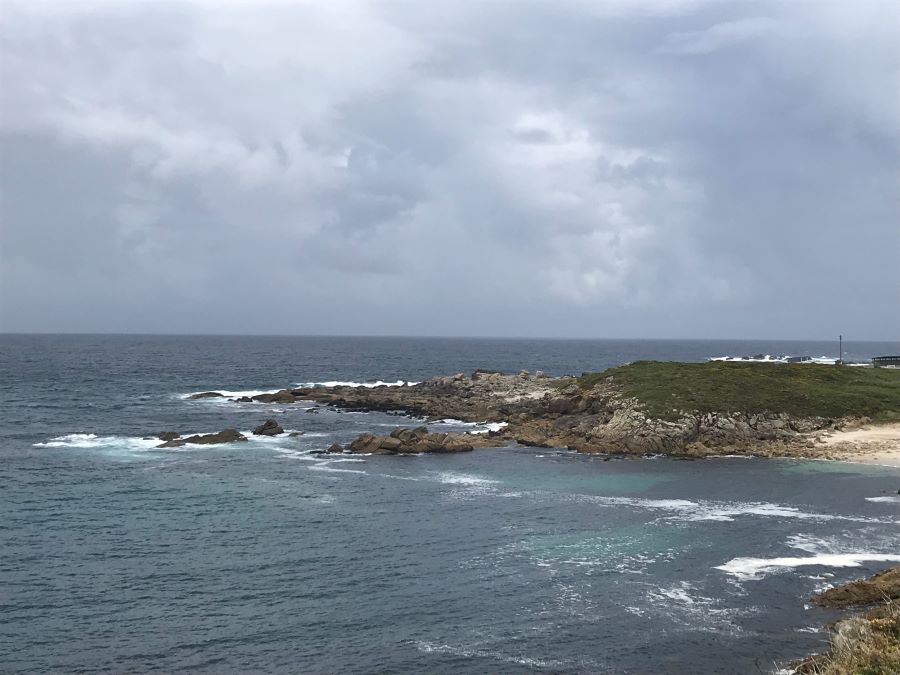
I had hoped to see more of the Atlantic Ocean, since the trail loosely follows the coast, but I only had a couple of distant views until I reached the outskirts of Muxia, where suddenly the sun made a rare appearance, just long enough for me to snap some photos of the beautiful beach and outcrops of rock, into which waves crashed, spewing water well into the air, before the sun disappeared again behind the clouds. And then the rain came again.
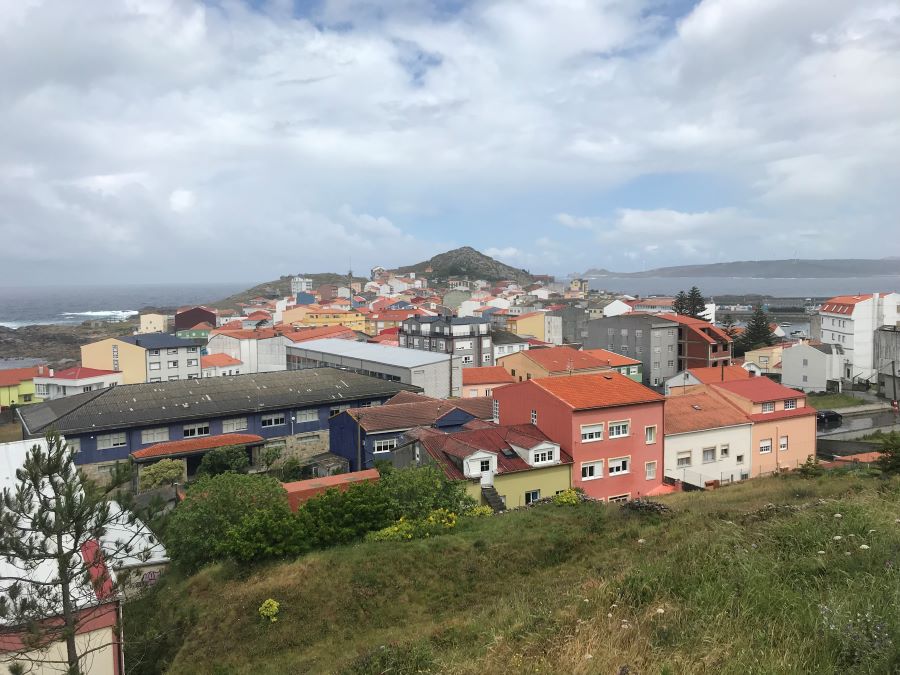
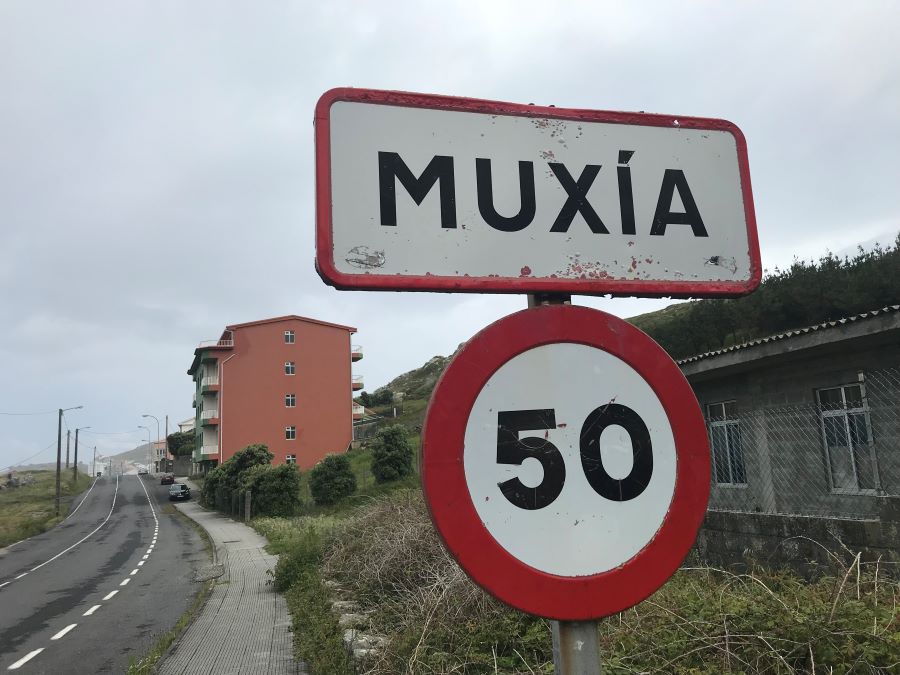
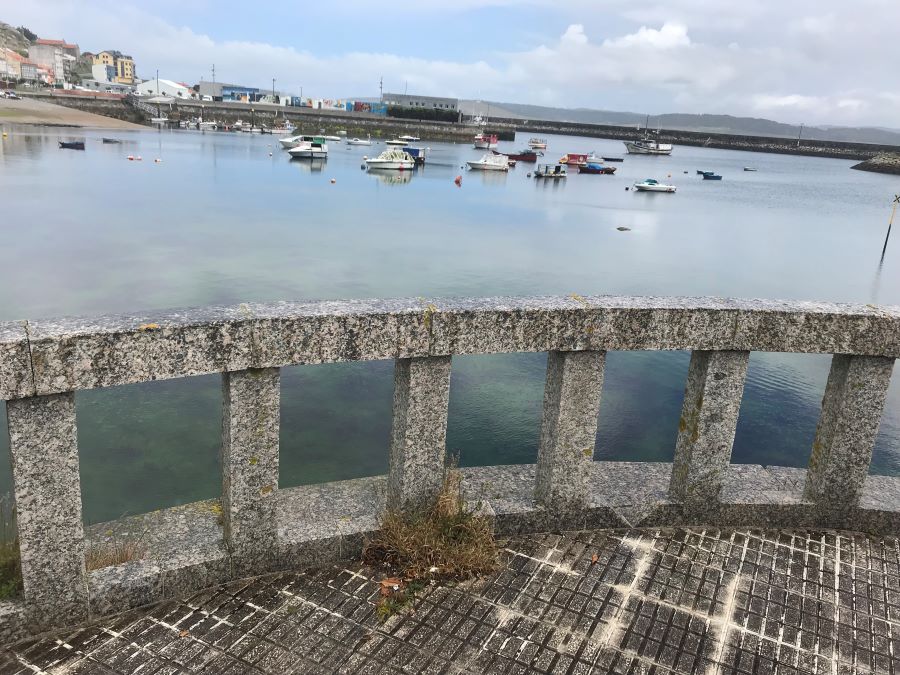
The first thing I noticed about Muxia is how colourful it is. I walked up a hill just to get a better view of the town because it just looks so darned pretty. It looks like someone touched up an old black-and-white photograph with coloured pastels. The town was quiet. I hadn’t seen a single person until I arrived at the port, where the street was filled with pilgrims and others, sitting under covered patios at the numerous cafes, enjoying the culinary delights of Muxia.
I indulged in a meal myself while a few birds watched me closely from their perches on nearby chairs. The food was typical of what I’ve been seeing in Galicia, which is to say that it’s very plain. A bocadilla francesca is essentially an omelette sandwich. The meal arrives arrives with the salted omelette sitting lonely between two halves of a white bun. There are no tomatoes, no lettuce, no ketchup, no butter, no cheese, nothing. Just the omelette and the bread. Today’s meal is no different – fried eggs and french fries, well salted, with nothing else. It’s kind of like the food I cook for myself. Plain and boring. Feels like home.
The rain continues to fall and I find myself missing my friends from the Camino del Norte. I’ve written a haiku for each of them, but forgot to gift them in the end. A man tries to make idle conversation with me, but I’m not interested. I just want to be alone.
This is the end of the Camino de Finisterre for me. I’ve walked nearly 120 kilometers to both Finisterre and Muxia, which was my plan, and I don’t see a compelling reason to complete the loop back to Santiago, walking over trail I’ve already walked twice before. I’ll finish my meal, grab the bus to Santiago, and then another bus to Ferrol on the northern coast, and tomorrow I’ll set out on my next Camino. The English Camino.
Here are the haikus for my Camino del Norte friends:
Birte
Your surfing passion,
Like a life philosophy,
Inspires my own life.
Kaitlin
That first friendly smile,
You offered your breakfast chair,
And then we were friends.
Greg
A true gentleman,
Friendly, caring, genuine,
A fine example.